NATURA-2000
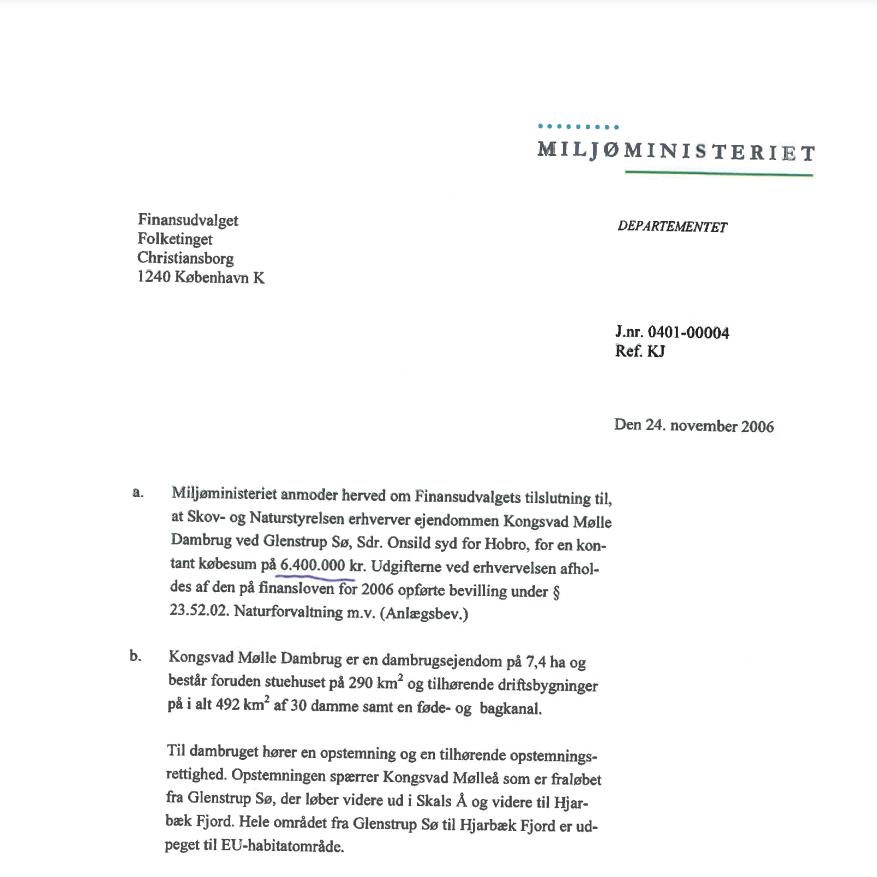
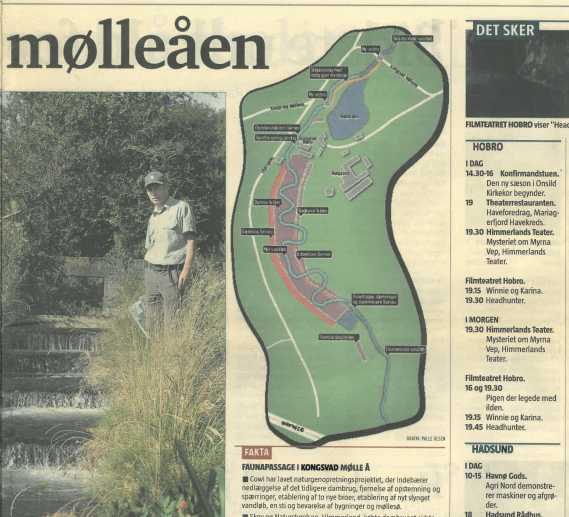
As part of nature restoration, the Danish Nature Agency bought the Kongsvad Mølle fish farm, and the fish farm operation ceased during June 2008. With the end of the fish farm operation, the nutrient load to Hjarbækfjord was reduced by 4 tons of nitrogen and 380 kg of phosphorus per year. However, the fish farm in its then form was still a barrier to migrating fish, as the fish ladder downstream of the fish farm had a limited effectiveness, and there were other minor blockages in the stream around the fish farm. With the project, the Danish Nature Agency wanted to preserve the mill plant itself at Kongsvad Mølle and the environment around the mill pond. At the same time, it was desired to establish a full fauna passage, and re-wind the stream in a natural and historically authentic way in the stream valley.
The Danish Parliament has decided that important water and nature areas should be investigated on an ongoing basis to gain as much knowledge as possible about the current state of nature and the aquatic environment. The greater the knowledge of the state of nature and the aquatic environment, the better the Ministry of the Environment can, for example, tailor projects that benefit nature, the aquatic environment and agriculture. For example, the following studies have been carried out in recent years at Kongsvad Mølle;
- May 2023: Diatoms in watercourses
- June 2022: Species monitoring of amphibians (brown frogs/ great crested newt)
- February 2021: small animals in streams
- July 2021: aquatic plants in watercourses
- June 2020: bat monitoring
In 2008, the Danish Forest and Nature Agency bought Kongsvad Mill and initiated a large-scale nature restoration project.
This meant closing down the fish farm and restoring the mill stream to its original course, so that after 700 years, fish, otters and rare nature could once again thrive in and around the stream.
Birds such as kingfishers, water starlings, coots, coots, pheasants, green-legged partridge, ducks, herons and various birds of prey are among the frequent visitors in and around the lakes and the stream.